| 5/11/1810 | Louis Napoleon Bonaparte is baptised at the Palace of Fontainebleau. Napoleon I served as his godfather and empress Marie Louise as his godmother. His father, who lived separated from his mother Hortense, stayed away. [Marie Louise, Empress of France, Duchess of Parma][Napoleon I Bonaparte] |
| 21/3/1815 | Hortense de Beauharnais visits Napoleon and brings her children. She had visited him after his return to power on 20 March but he had been cold to her and accused her of collaboration with the Bourbons. But he asked her why she had not brought the children and the next she returned with the children. Napoleon was again cold to her but embraced the children and took Napoleon Louis and Louis Napoleon to a window where the crowd was cheering. By April Napoleon had forgiven Hortense and in absence of Marie Louise and her son she accompanied him on state occasions. [Beauharnais, Hortense de][Bonaparte, Napoléon Louis][Napoleon I Bonaparte] |
| 19/7/1815 | Hortense de Beauharnais and her sons leave Paris for Geneva. Napoleon had surrendered himself to the English four days before. They stopped at Aix-les-Bains. [Beauharnais, Hortense de] |
| 7/12/1815 | Hortense de Beauharnais settles near Lake Constance in Switzerland. Her son Louis-Napoleon was with her. [Beauharnais, Hortense de] |
| 0/4/1821 | Louis Napoleon Bonaparte enters the gymnasium in Augsburg |
| 11/11/1832 | Louis Napoleon Bonaparte visites his uncle Joseph in London. His visit lasted until May 1833. Apart from enjoying high society in London he studied the British industrialisation by visiting many factories in Birmingham. [Bonaparte, Joseph] |
| 0/7/1835 | Persigny meets Louis Napoleon Bonaparte in Arenenberg |
| 30/10/1836 | The first Coup d'État by Louis Napoleon Bonaparte fails. He tried to seize power in Strasbourg but a regiment surrounded the mutineers and they surrendered. Louis fled to Switzerland. The French wanted his extradition to French, but he was a Swiss citizen and the request was refused. He left Switserland voluntarily and after a short time in prison he was put on a ship to the USA. |
| 9/11/1836 | Louis Napoleon Bonaparte is put on the stage coach to Lorient. There he would be brought on board of the Andromède. The captain received sealed orders that he was only allowed to open far on the Atlantic Ocean. The orders told him to sail to Rio de Janeiro, wait there for a month and then continue to Norfolk in the USA. It was clear that Louis should be out of the way during the trial of the other conspirators. The French people didn't consider it fair that the leader was freed and the others were tried. This led to their acquittal. |
| 30/3/1837 | Louis Napoleon Bonaparte disembarks at Norfolk, Virginia |
| 12/6/1837 | Louis Napoleon Bonaparte leaves the USA. He was having a good time in New York, but he received a letter from Switzerland from his dying mother Hortense. On the back Dr. Conneau had written 'Venez, venez!'. He decided to return to Europe immediately and boarded on the ship George Washington for London. [Beauharnais, Hortense de] |
| 10/7/1837 | Louis Napoleon Bonaparte disembarks in London. He had returned from the USA because his mother Hortense was dying in Switzerland. He travelled incognito to Switzerland where he reached Hortense two month before her death. [Beauharnais, Hortense de] |
| 31/7/1837 | Loui Napoloen Bonaparte embarks for Rotterdam. He was travelling to his dying mother in Arenenberg and he travelled along the Rhine to Mannheim to avoid French territory. |
| 4/8/1837 | Louis Napoleon Bonaparte reaches his dying mother Hortense. The French government had tried to prevent him from travelling from London to the continent. His friend Persigny helped him to a Swiss travelling permitted for 'Mr. Robinson'. After shaking off French agents he travelled to Rotterdam and then to Arenenberg, where his mother was living. [Beauharnais, Hortense de] |
| 14/10/1838 | Louis Napoleon Bonaparte leaves Gottlieben in Switzerland voluntarily. After the death of his mother Hortense he had lived there. The French government had asked the Swiss government to expel him, but he was popular in Switzerland and an answer to the request was delayed. After the French sent troops to the Swiss border and the Swiss started a mobilisation, Louis Napoleon declared that he would go to London voluntarily. This added to his popularity in Europe and many thought that King Louis Philippe of France had made a fool of himself. |
| 25/10/1838 | Louis Napoleon Bonaparte reaches London. He had voluntarily left Switzerland after pressure from France to expel him. |
| 3/3/1840 | A duel between Louis Napoleon Bonaparte and Léon Denuelle is prevented. Denuelle was the illigetimate son of Napoleon I and Louis had refused to receive him in London. Louis was arrested at Wimbledon before the duel could start and it never took place. |
| 4/8/1840 | Louis Napoleon leaves England for a second coup d'etat in France. He left with the ship Edinburgh Castle. His intention was to start a milkitary putsch that would result in a resurrection against the government of King Louis Philippe. |
| 6/8/1840 | The second coup d'etat of Louis Napoleon Bonaparte fails. He came ashore with 50 men but instead of seizing military objects they were driven back to the sea. Most of his men were killed and he was taken prisoner. |
| 28/9/1840 | Start of the trial against Louis Napoleon Bonaparte. Because of his failed coup d'etat. He was sentenced to imprisonment for life in a fortress within the French borders. |
| 6/10/1840 | Louis Napoleon Bonaparte is sentenced to imprisonment for life. the reason was his second failed coup d'État. His jail would be the fort at Ham near Reims. |
| 20/5/1846 | Mistress Alexandrine leaves Louis Napoleon Bonaparte. She was his maid as well as his lover during his imprisonment at the fortress Ham. Because he was planning to escape he sent her and their two children away. At eight in the morning she left the fortress crying, together with the children. [Vergeot, Eléonore] |
| 26/5/1846 | Louis Napoleon Bonaparte escapes from his prison. A disguise was smuggled into the fortress of Ham and Louis simply walked out of the fortress. The pipe that he had in his mouth fell to pieces and he collected the pieces to avoid being discovered. His escape wasn't noticed until twelve hours later. |
| 27/5/1846 | Louis Napoleon Bonaparte arrives in London. He had escaped at 6 AM the previous day from the fortress of Ham and had crossed the Channel under the name of Comte d'Arenenberg. The same day he met his friend Lord Malmesbury in London. They dined together and when Malmesbury noticed Louis de Noailles from the French embassy he asked him 'Do you know who this is? Louis Napoleon, he has just escaped'. De Noailles ran away because he wasn't yet aware of the fact. Malmesbury claimed that he had never seen a man looking so scared. [Malmesbury, James Howard Harris, 3rd Earl of] |
| 25/2/1848 | Louis Napoleon Bonaparte arrives in Paris. He wanted to join the revolution in France but when he arrived the revolution was already over. |
| 12/6/1848 | The French government threatens to arrest Louis Napoleon Bonaparte. He was elected into the National Assembly, but the government threatened to arrest him if he would come from England to France. The government referred to the banning of the entire Bonaparte familiy, but Jules Favre wondered how this was possible since Prince Napoleon, Pierre Bonaparte and Lucien Murat had been elected before and were admitted. Louis Blanc and Pierre Joseph Proudhon supported Louis Napoleon as well. After a fake story by Lamartine that the Bonapartists had fired at the National Guard, the government received more support, but two days later it became clear that Lamartine had lied. [Bonaparte, Pierre Napoleon][Favre, Jules][Murat, Lucien, 3e Prince Murat] |
| 14/6/1848 | The National Assembly votes in favour of admitting Louis Napoleon Bonaparte. De Lamartine had stopped his admission by telling lies about the Bonapartes. After he was found out a large majority of the National Assembly voted in favour of Louis Napoleon. Lamartine's next step was to spread a rumour that Louis Napoleon planned a coup d'état. |
| 15/6/1848 | Louis Napoleon gives up his seat at the National Assembly. After much discussions in France whether he was allowed to take his seat he declined it himself. He did this after consternation over his letter from 14 June in which he hadn't used the word republic. The Times had also written that there were strong rumours that a Bonaparte coup would take place. Favre, who had spoken in favour of Louis Napoleon a few days before, now wanted to ask the Minister of Justice if the letter should lead to the prosecution of Louis Napoleon. After he gave up his seat no prosecution took place. [Favre, Jules] |
| 20/6/1848 | Teresa Gamba writes Lady Blessington about Louis Napoleon Bonaparte. She was now Marquise de Bloissy and she wrote that Louis Napoleon's party was now very strong and especially in the country the name of Bonaparte had an enormous prestige. The fact that the communists supported him made the 'honest folk' a bit conspicious. She stated that he would be welcome if he could save 'this poor France'. [Blessington, Margaret Gardiner, countess of] |
| 21/9/1848 | Louis Napoleon Bonaparte is elected again into the National Assembly. The candicated of the dictator Cavaignac were the favourites for the eleven seats, but in Paris they were swept away by Louis Napoloeon. Louis obtained 111,752 votes, Achille Fould 78,891 votes and Raspail 66,693 votes. After his election became known the National Guard sang the Bonaparte song 'Veillons au salut d'empire' and the people shouted 'Vive Napoléon! Vive L'empereur!'. After the news reached London, Louis Napoleon packed his bags and left for Paris. [Cavaignac, Eugène Louis] |
| 26/9/1848 | Louis Napoleon Bonaparte takes his seat in the National Assembly. He was elected by five departments and had received 300,000 votes. He travelled from London to Paris, where he arrived on 24 September. There were rumours that he would be arrested, but dictator Cavaignac declared that Louis was allowed to take his seat. [Cavaignac, Eugène Louis] |
| 3/11/1848 | Thouvet tries to stop Louis Napoleon Bonaparte as presidential candidate. He proposed to the National Assembly that members of the Bonaparte family should be excluded from the presidential elections that would take place in December. Cavaignac was of the opinion that this was no longer possible. It was already decided that a candidate should obtain the absolute majority of the voters and at least two million votes. Otherwise the president would be chosen by the National Assembly, where Louis Napoleon was less popular than with the people in France. [Cavaignac, Eugène Louis] |
| 10/12/1848 | Louis Napoleon Bonaparte wins the presidential elections in France. He received 5,434,226 votes. The other votes: Cavaignac 1,448,107; Ledru Rollin 370,119; Raspail 36,900; Lamartine 17,190; Changarnier 4,790. [Cavaignac, Eugène Louis][Ledru-Rollin, Alexandre Auguste] |
| 17/12/1848 | Louis Napoleon triumphantly rides to the Élysée Palace. He had been elected president the week before. |
| 20/12/1848 | Louis Napoleon Bonaparte starts his presidency |
| 0/0/1849 | Louis Napoleon dines with Maria Manuele de Montijo and her daughter Eugénie. Maria Manuela and Eugénie were staying in Paris and they had been introduced to him. He ordered his secretary Bacciochi to invite them for a diner at Saint-Cloud. Apart from Bacciochi nobody was present. After the diner he offered his arm to Eugénie who responded that her mother should receive that honour. He walked armed with Maria Manuela and Eugénie received the arm of Bacciochi. [Kirkpatrick, Maria Manuela, countess of Montijo] |
| 0/0/1849 | Louis Napoleon visits cholera patients. In the summer of 1849 a chorera epidemic swept over Paris. Louis Napoleon visited hospitals and spoke with victims. The people of Paris were very impressed because they were used to sovereigns that fled the city as soon as there was danger. |
| 0/0/1849 | Louis Napoleon praises Henry IV at Chartres. Henry IV had been crowned in Chartres in 1594. Louis Napoleon praised him for appeasing catholics and protestants after thirty years of war. He visited more cities during the summer nad his speeches included references to the places where he was. At Amiens, where a treaty with England had been signed in 1802, he spoke of the peaceful intentions of France towards other nations. |
| 0/0/1849 | Louis Napoleon visits his former prison in Ham. He had been imprisoned here from 1840 to 1846. His old cell was now inhabited by the Arabian Bou-Maza, who had fought against the French. Louis ordered his release and was freed on 22 July 1849. |
| 27/1/1849 | An article of Proudhon against Louis Napoleon is published in "Le Peuple". Proudhon agitated against the possibility that Louis Napoleon would send the National Assembly home and suggested that the National Assembly should send Louis away. Louis didn't send the National Assembly away and Proudhon was prosecuted for libel by the government. |
| 14/3/1849 | Louis Napoleon gives a ball at the Elysée. The ball was organised in two large galleries at the Élysée and apart from Cavaignac all generals of the French army were there. The widow of Marshall Ney was under the guests as well. |
| 19/3/1849 | Proudhon attacks Louis Napoleon again in his newspaper. He condemned the executions of the rebels who had shot the negotiator general Bréa in June 1848. After much hesitation Louis Napoleon had allowed that two of the five executions took place on 17 March 1849. For the second time Proudhon was prosecuted for libel and this time he disappeared to hide somewhere in France. In absence he was convicted to three years of imprisonment. |
| 3/6/1849 | French troops fight Garibaldi before the gates of Rome. The French had ended the armistice on 1 June 1849. General Oudinot had said that he wouldn't attack 'the place' before the fourth of June. When he occupied the Villa Corsini outside the gates of Rome he was accused of breaking his word. Garibaldi's troops tried to drive the French troops away but they failed. Garibaldi lost 1,000 of his 6,000 men during the attempt. the radical fractions in Italy, France and other European countries never forgave president Louis Napoleon that he had allowed this to happen. [Oudinot, Charles, 2nd Duc de Reggio] |
| 3/7/1849 | The French troops conquer Rome. Pope Pio IX was expelled by revolutionary Italians and Rome was occupied by an army led by Garibaldi afterwards. France sent troops to help the pope, but they were surprised by the army of 8,000 Italians and driven back. In Paris the parliament protested against the interventions and riots broke out. Eventually Garibaldi wasn't able to defend the city after Oudinot started using heavy artillery and they entered Rome in the night of 29 to 30 June. Mazzini was forced to flee to England and on 3 July Rome surrendered to Oudinot. [Mazzini, Giuseppe][Oudinot, Charles, 2nd Duc de Reggio] |
| 7/8/1849 | Louis Napoleon orders Oudinot to return to France. Oudinot had taken Rome earlier that year. Louis Napoleon wasn't entirely happy with the return of Pope Pio IX. Apart from that, th French had liberated Rome without the Austrians or the Spaniards, but the cardinals thanked 'the Catholic States of Europe' for the crusade in favour of the Pope. [Oudinot, Charles, 2nd Duc de Reggio] |
| 18/9/1849 | Pope Pio IX refuses a constitution and a liberal government. He published his motu proprio in which he promised to allow a certain amount of decentralisation, but he did not meet the wish of Louis Napoleon Bonaparte to allow a liberal government. Pio IX explicity praised 'the armies of the Catholic nations' instead of explicitly mentioning France that had recovered Rome for him without the help of other nations. |
| 0/10/1849 | Louis Napoleon Bonaparte visits the army and meets workers. Louis spent much time in meeting the people. He inspected the troops during a huge miltary parade at Satory, near Versailles. He spoke with workers in the workplace Faubourg Saint-Antoine. |
| 31/10/1849 | Louis Napoleon Bonaparte suddenly dismisses the government. There had been several arguments between him and the government but his decision was unexpected. He stated that the government should cooperate with the president, who was chosen by the people, and that it should accept his leadership. He nominated no successor for prime minister Odilon Barrot. General d'Hautpoul became Minister of War, Ferdinand Barrot became Minister of Internal Affairs and Achille Fould was the new Minister of Finance. Most of the press criticized his action, but Le Constitutionel stated that he did not have the support of the press, but he did have the support of the people. [Fould, Achille] |
| 15/8/1850 | Lpuis Napoleon Bonapartist visits the socialist stronghold Lyon. He did this on the birthday of Napoleon I and he arrived on a steamer. On a white horse he rode to the town hall. He was applauded by the crowd. The authorities considered it unwise to enter the leftish district Croix-Rousse, but he did so with only a small escort. In Lyon he held speeches and attended banquets. |
| 1/6/1851 | Louis Napoleon Bonaparte criticizes the National Assembly. It was between Tonnerre and Dijon where he was to open a new part of the Paris-Lyon railway. 30,000 people had come to the station of Tonnerre t osee him and women threw flowers at him from their windows when he passed. In a speech he criticised the National assembly because they did supported him in case of repression of rebellions but they never did when he wanted to do something for the people. His speech increased speculation of a future coup d'état. |
| 14/7/1851 | Victor Hugo protests against a proposal to change the constitution in favour of Louis Napoleon Bonaparte. He was a member of parliament and he was opposed to the changed proposal that would enable Louis Bonaparte to be reelected as president. He stated: "Because we had Napoleon the Great, should we have Napoleon the Small?". Subsequently he was interrupted by protests. |
| 19/7/1851 | The National Assembly rejects a change to the French constitution. Louis Napoleon Bonaparte wanted to change to constitution so that he could be reelected as president. The vote was 446 against 278 in favour of his proposal, but a two-third majority was required. He also wanted the command over troops and he wanted his salary to be increased. Both proposals turned down. |
| 1/12/1851 | Louis Napoleon Bonaparte gives a ball at the Élysée. He was charming and relaxed, although he had planned a coup d'État for the next day. One of the guests was Caroline Norton, who was accompanied by the marquis of Douglas. As one of the few, she perceived that Louis Napoleon looked a bit exited. Persigny, Saint-Arnaud, Maupas and Mocquard were all involved in the coup and were all present. Morny had visited the theatre but afterwards he came to the Élysée as well. [Morny, Charles Auguste Louis Joseph, Duc de][Norton, Caroline] |
| 2/12/1851 | Coup d'État of Louis Napoleon Bonaparte. 76 persons were arrested at night and brought to the prison at the Rue Mazas. Among them were Thiers, Cavaignac, Changarnier, Bedeau and Lamoricière. The army was positioned at strategic locations in Paris. Louis Napoleon was declared president for 10 years and in 1852 he would become emperor of France. [Cavaignac, Eugène Louis][Thiers, Adolphe] |
| 4/12/1851 | Riots are knocked down in Paris. In the republican suburbs barricades were erected against Louis Napoleon Bonaparte's Coup d'Etat. The army destroyed the barricades with canons and chased away the rioteers. The army passes though the city center to the East. At the Boulevard des Italiens a shot is fired. The soldier think that they're shot at and fire away. This time wealthy citizens are killed instead of workers. By the end of the day 400 civilians and 27 soldiers have been killed. |
| 20/12/1851 | Louis Napoleon Bonaparte is elected president for 10 years. He received 7,5 million votes. |
| 14/1/1852 | Louis Napoleon Bonaparte issues a new constitution. The 'sovereign people' obtain the right to reject or accept laws by referendum. The Senate and the legislative body can discuss the laws and the head of state obtains more executive power. |
| 22/1/1852 | Louis Napoleon Bonaparte declares the Orléans property forfeited. The former king Louis Philippe was a member of the house of Orléans. The duc de Morny and Princess Mathilde had advised strongly against this decree, but according to Persigny it was the only way to break the power of the Orléans family. The decree stated that the Orléans family should sell all its property in France within a year. Some posessions became the property of the state. [Morny, Charles Auguste Louis Joseph, Duc de] |
| 31/1/1852 | Louis Napoleon Bonaparte changes the Legion d'Honneur. The order was introduced by Napoleon I in 1802. His successors had changed the appearance of the medal. By decree he declared that the picture of Napoleon I would return the medal with the text "Napoléon empereur des Français" on the front and the text "Honneur et Patrie" on the back. |
| 17/2/1852 | President Louis Napoleon declares August 15 a national day for France. It was the birthday of Napoleon I and it became the only national day off in France. [Napoleon I Bonaparte] |
| 19/9/1852 | Louis Napoleon Bonaparte is received enthousiastically at Lyons |
| 26/9/1852 | Napoleon III lays the cornerstone of the future cathedral. It happened on 26 oor 27 September. He was passing through Marseilles on his way to Toulon. He also announced a governance grant of 2,500,000 francs for the construction of the cathedral. Bishop de Mazenod received the Legion of Honour. |
| 27/9/1852 | Louis Napoleon Bonaparte visits Toulon |
| 7/10/1852 | Louis Napoleon Bonaparte visits Bordeaux and refers to an empire. During his speech at the Bourse he spoke the famous words "L'empire c'est la paix". |
| 16/10/1852 | Napoleon III releases Abd-el-Kader. Abd-el-Kader first swore on the Koran that he would never fight against the French anymore in Africa. He and Napoleon remained on very good terms afterwards and after his release he visited France several times. |
| 25/10/1852 | The Count of Chambord protests against the planned empire. Louis Napoléon Bonaparte wanted to restore the empire of his uncle Napoleon I. As the Bourbon pretender to the throne, the Duke of Chambord protested. [Henri, Duke of Bordeaux and Count of Chambord] |
| 4/11/1852 | Louis Napoleon Bonaparte request a referendum for the restoration of the empire. He told the Senate that he wanted to restore the empire and that he wanted the people to be consulted on this change. |
| 7/11/1852 | The Duke of Reichstadt is to be called Napoleon II. This was decided by the future Napoleon III beause Napoleon I had abdicated in favour of his son, who had therefore been emperor for a few days. [Napoleon II, Duke of Reichstadt] |
| 7/11/1852 | The Senata of France nominates Louis Napoleon Bonaparte as emperor |
| 22/11/1852 | The French people vote in favour of the empire. 7.824,189 votes were in favour of appoinint Louis Napoleon Bonaparte as emperor, 253.145 were against it and 63,326 votes were invalid. |
| 2/12/1852 | The French Senate restores the empire with Napoleon III as emperor |
| 24/12/1852 | Napoleon III declares Jerôme Bonaparte heir to the throne. Jerôme was his uncle and a brother of Napoleon I. [Bonaparte, Jérôme] |
| 12/1/1853 | Napoleon III asks for the hand of Eugénie de Montijo. He did this during a ball at the Tuilleries. Eugénie had turned down many rich people and Napoleon had corresponded with her for some time. He invited her for the hunting season at Compiègne and during horse rides they got to know each other better. The wives of the official guests complained of the attention that the emperor paid to this Spanish 'adventuress'. Eugénie asked him to declare himself or to let her go and he asked her to marry him. |
| 22/1/1853 | Napoleon III officially announces his marriage. He presented it as a love match, but although Eugénie and her family had been after him, it is unclear is she loved him. At this day his mistress Harriet Howard left for England. He had asked her to go to London to pay someone who blackmailed him. Because of a storm she could not make the passage. In the morning she read in Le Moniteur about his engagement. She understood that she was meant to be in London at the time the engagement was made public. She returned to Paris to make a scene, but Persigny managed to calm her down. [Howard, Harriet, Comtesse de Beauregard] |
| 30/1/1853 | Napoleon III marries Eugénie de Montijo in Paris. The ceremony took place in the Nôtre Dame. They used the same carriage as Napoleon when he was crowned (1804) and when he married Marie Louise (1810). The golden crown on top of the carriage fell on the ground like in 1810. After the dinner they went to Villeneuve-l'Etang where the guests held endless speeches. This irritated Napoleon who told Eugénie that they should go away. She told him to walk to the door. He did so and she followed him, wishing good night to the guests. |
| 28/2/1853 | Napoleon III and Eugénie attend a performance at the Théâtre Lyrique in Paris. They were received by Jules Seveste, the new director. The program included the premiere of the ballet "Le lutin de la vallée" with music by Eugène Gautier. Eugénie was pleased and gave the ballerina Marie Guy-Stéphanie a diamont bracelet. [Gautier, Eugène] |
| 5/7/1853 | An attack on Napoleon III is prevented. Napoleon and Eugénie would attend a performance at the Opéra Comique. The secret police recognized a man in the crowd who was wanted. He was arrested with fifteen other, all Italians. They turned out to carry daggers and they admitted that it was their intention to kill the emperor. |
| 0/10/1853 | Napoleon III and empress Eugénie visit the Provence. At the occasion many political prisoners were released. |
| 16/4/1855 | Napoleon III and Eugénie arrive in Dover to visit England. Supported by the French government, the English government had invited Napoleon for a visit to England to prevent him from visiting the war front at the Krim. Napoleon and Eugénie were cheered and he pointed out the house to her in King Street where he had lived in 1847. |
| 28/4/1855 | Pianori tries to assasinate Napoleon III at the Champs-Élysées. He tried to shoot the emperor with a double-barreled pistol when Napoleon passed on horseback on his way to the Bois de Boulogne. His two shots missed the emperor. He was arrested, sentenced to death on 7 May 1855 and executed on 14 May 1855. |
| 18/8/1855 | Victoria and Albert visit Napoleon III in France. They arrived in Boulogne and took the train to Paris. They received a splendid reception. Napoleon III wanted to impress them and show how prosperous France had become under his reign. He knew all about Victoria's life and he sang German duets with Albert, who still didn't trust him. He too Bertie (the future Edward VII) on a ride through the streets. Bertie said he wished Napoleon III was his father. Eugénie was pregnant at the time and wasn't seen much in public. |
| 27/8/1855 | Victoria and Albert say goodbye to Napoleon III. Victoria had enjoyed their state visit and Albert was satisfied as well, although he had mostly visited museum and exhibitions on his own while Napoleon was flattering his wife. The French were shocked by Victoria's length and her bad taste in dressing. Eugénie had even shortened the legs of a table for Victoria. The only thing Victoria didn't like was meeting the emperor's nephew Plon-Plon, whom she described as 'rude and disagreeable in the highest degree'. |
| 8/9/1855 | Edmond Bellemare attempts to kill Napoleon III in Paris fails. He was mentally disordered. When the emperor and empress had visited a performance at the Comédie-Italinenne he drew two pistols in the Rue du Marsollier and aimed at their carriage. But he missed and nobody was hurt. He was arrested and treated as a lunatic in the Hôpital Bicêtre before being deported to Tahiti.
The emperor wasn't hurt. |
| 15/11/1855 | Ingres receives a honourable medal from Napoleon III in person. Ingres was disappointed that he had to share the medal of the Exposition Universelle with nine others. Because it was feared that he wouldn't show up at the ceremony he was made grand officer of the Légion d'Honneur on 14 Nov 1855. The next day he received the medal from the emperor himself. [Ingres, Jean Auguste Dominique] |
| 16/3/1856 | Birthof the Prince Impérial at the Tuileries Palace in Paris. The son of emperor Napoleon III and empress Eugénie was born at three o'clock in the morning after a delivery of 22 hours. The emperor was there and Prince Napoléon-Jerôme Bonaparte was present as well. |
| 0/6/1856 | William Bouguereau receives a commission to paint Emperor Napoleon III. The result was 'Napoléon III visitant les inondés de Tarasco'. It was shown as number 319 at the Salon in Paris in 1859. [Bouguereau, William] |
| 14/6/1856 | The Prince Imperial is baptised at the Nôtre Dame in Paris. Napoleon III was involved in a love affair with 'la Castiglione', but he was present together with empress Eugénie. It was a sunny day and the theatres in Pairs opened their doors for free. There was dancing in the streets and there were fireworks at the Place de la Concorde. Bishop de Mazenod from Marseille was there as well. [Castiglione, Virginia Oldoini, countess Verasis de] |
| 24/9/1856 | Inauguration of the town hall of Avignon by Napoleon III. The façade was designed by Léon Feuchère and Napoleon III inaugurated it together with mayor Paul Poncet. |
| 12/3/1857 | Empress Eugénie 'meets' her deceased father through Daniel D. Home. She communicated via handshakes with her father who had died exactly 18 years earlier. Empreror Napoleon III was present as well. His half brother thought Home was an imposter and threatened to resign as Minister of Foreign Affairs if the seances at the Tuilleries wouldn't stop. [Home, Daniel Dunglas][Montijo, Cipriano Palafox y Portocarrero, count of] |
| 12/8/1857 | Le Moniteur announces the Médaille de sainte-Hélène. The newspaper published a decree that was issued by Napoleon III. The medal served to memorize the heroes from 1792 until 1815. |
| 14/8/1857 | Alexandre Dumas fils is decorated by Napoleon III. Princess Mathilde wanted to introduce him to the emperor before the ceremony, but he refused, claiming to be too shy. [Dumas, Alexandre (fils)] |
| 16/8/1857 | Napoleon III awards the first Médailles de Sainte-Hélène. He gave the medals to his uncle Jérome Bonaparte, Comte Vaillant (Minister of War), admiral Hamelin (Minister of Marine), Duc the Plaisance (chancellor of the Légion d'Honneur), General de Flahaut, Comte Ornano (governor of the Invalides), Admiral Perceval-Deschênes and others. [Bonaparte, Jérôme][Flahaut de la Billarderie, Charles de] |
| 30/9/1857 | Napoleon III leaves Stuttgart for Paris. On 30 September, 1857, the emperor Napoleon III left his successful summit meeting at Stuttgart with Alexander II, arriving in Paris the following day to join up with his wife, the Empress Eugénie, who had recently returned (29 September) from Biarritz with their son, the Prince impérial. They left together the next day, 2 October, for the recently established Châlons military camp where the emperor was to review the troops.
|
| 14/1/1858 | Felice Orsini's attempt to kill Napoleon III fails. With his three accomplices he threw three bombs at the imperial carriage in Paris. Eight people died and 150 people were injured, but the emperor and the empress were not hurt. Shortly afterwards they appeared before the public in their box in the theatre. Eugénie wrote to her mother that there was a hole in the emperor's hat. Orsini was wounded and arrested the next day. He was sentenced to death and executed on 13 March 1858. [Massol, Eugène] |
| 21/7/1858 | Secret meeting between Napoleon III and Cavour. It took place at Plombières. Napoleon was there for curing and Cavour had entered the country incognito at Strasbourg. They agreed there would be an uprising in Modena and after Austria would threaten the regio with violence, France would send troops. Their meeting wasn't a secret for long and many guessed what they were up to. |
| 4/8/1858 | Napoleon III inaugurates the railroad between Cherbourg and Paris. He had arrived at Cherbourg that day accompanied by empress Eugénie. |
| 7/8/1858 | Napoleon III dock inaugurated at the harbour of Cherbourg. Napoleon III and empress Eugénie were there. Queen Victoria and prince Albert had arrived on August 5th as well, but they had left early because they didn't want to witness the unveiling of a statue of Napoleon I that took place on the same day. This statue by Armand de Veel is still there. |
| 4/4/1859 | Premiere of Meyerbeer's "Le Pardon de Ploërmel" at the Opéra-Comique in Paris. The libretto was written by Jules Barbier and Michel Carré. Meyerbeer was the conductor. The soprano Marie Cabel created the part of Dinorah. Jean-Baptiste Faure was Hoël. After the performance Emperor Napoleon III and Empress Eugénie invited Meyerbeer to the Royal Box, where Marie Cabel placed a laurel wreath upon his head. [Meyerbeer, Giacomo] |
| 3/5/1859 | Napoleon III issues a proclamation that Austria has declared war on France. The emperor stated that Austria had done so by invading Piedmont and that the French would be fighting for the liberation of mankind. Hh reminded that that the French had replaced the Pope on his throne but he did not mention that he had made a secret treaty with Victor Emanuel and Cavour that three-quarters of his territory would be taken away from the Pope. |
| 10/5/1859 | Napoleon III leaves Paris to join his troops. He had appointed empress Eugénie as Regent for the duration of his absence. Eugénie accompanied him in the train to Montereau before she returned to Saint-Cloud. Prince Napoleon accompanied the emperor and his new wife princess Mathilde Clotilde stayed in France. |
| 12/5/1859 | Napoleon III disembarks in Genoa. He had sailed from Marseilles on the omperial yaught "La Reine Hortense" and arrived at the port of Genoa in the morning. Cavour welcomed him and he was cheered by the crowds. In the evening he was cheered again when he went to the opera with Cavour to see "Ione", based on Bulwer-Lytton's "Last Days of Pompeii". |
| 20/5/1859 | The French defeat the Austrians near Montebello. It was the first clash of Napoleon III's Italian campaign. The Austrian troops were commanded by Karl von Urban and the troops from Piedmonte and France were under command of Elie Foray. |
| 31/5/1859 | The French defeat the Austrians during the Battle of Palestro. The Battle was fought on 30 and 31 Mat. The French troops and the troops of the Kingdom of Sardinia-Piedmont fought against the Austrians and were victorious. King victor Emmanuell II was directly involved in the battle, Napoleon III and Francis Joseph weren't. [Franz Joseph von Habsburg, Emperor of Austria] |
| 4/6/1859 | Battle of Magento. The French and Sardinian troops under Napoleon III defeated the Austrians under Marshal Gyulay. From 1 to 3 June the French army had pursued the Austrian 2nd Army to the Ticino River. The Austrians set up a defensive position near Magenta. In the evening the Austrians were forced to withdraw to Abbiategrasso. Afterwards Patrice de MacMahon was created Duke de Magenta for his part in the battle. Gyulay resigned on 16 June. |
| 8/6/1859 | Victor Emanuel II and Napoleon III enter Milan. Since the beginning of the war Milan had opposed itself to Austria. It was a great triumph for Napoleon III because he did what his famous uncle Napoleon I had done: remove the Austrians from Lombardia. |
| 17/6/1859 | Napoleon III establishes his headquarters at Brescia. No one knew where he would take his army because he took all decision himself after consulting his staff and was secretive about his plans. |
| 24/6/1859 | Napoleon III defeats Franz Joseph near Solferino. The French armies were commanded by Napoleon III and the Austrian armies by Franz Joseph. Napoleon III was watching a chaotic fight from the church tower of Castiglione. He was smoking cigarettes continuously. The fighting took place at Campo di Medole, Solferino and San Martino. The Austrians were defeated by the French and Franz Joseph would never again take direct command of the Austrian troops. In a short time Napoleon III had driven Austria out of a large part of Italy. But the French troops had suffered heavy losses and this affected Napoleon. He decided to end the war and the Armistice of Villafranca was signed on 11 July 1859. Lombardia would be added to Piedmont, but Veneto remained under Austrian rule. Jean-Henri Dunant saw the battlefield afterwards. He was horrified and published "Un souvenir de Solférino". His actions started a process that led to the Geneva Conventions and to the foundation of the International Red Cross. [Dunant, Henry][Franz Joseph von Habsburg, Emperor of Austria] |
| 25/6/1859 | Napoleon III visits a field hospital after the Battle of Solferino. It was large barn where doctors and priests were treating the wounded in the great heat. In a corner there was a pile of amputated limbs. Napoleon left with most eyes and vomitted behind the barn. |
| 7/7/1859 | Napoleon III and Franz Joseph declare an armastice. Napoleon III had won several battles but it wasn't easy to proceed because tha Austrians had the larger army. He was also concerned about Prussia that might attack France at the Rhine border. [Franz Joseph von Habsburg, Emperor of Austria] |
| 11/7/1859 | Conference of Villafranca between France and Austria. Napoleon III and Franz Joseph met personally for peace talks. Their conversation wasn't recorded. The result was that Franz Joseph lost Lombardia to France but he was able to keep Venice on the condition that reforms would take place. The agreement would be formalised by Peace of Zürich. The Italians weren't consulted and were angry that Napoleon left Venice in the hands of the Austrians. It was suggested that Napoleon wanted to go home because it was hot and because he was sick of the futility of it all. [Franz Joseph von Habsburg, Emperor of Austria] |
| 17/7/1859 | Napoleon III returns to Paris. He had defeated the Austrians in Italy and on 19 July he spoke to the senate. |
| 14/8/1859 | Napoleon III holds a victory march through Paris. His popularity had risen considerably thanks to the blows he had inflicted on Austria. However, he himself knew that the victories had been narrow. At the Place de Vendôme, the Prince Imperial was placed on horseback by his father. He saluted the troops and then removed his Legion d'Honneur from his chest, throwing it to the Zouaves. It is unknown whether he did this voluntarily or if his father had ordered him to do so. |
| 10/11/1859 | Treaty of Zurich: Austria loses Lombardy. It was a confirmation of the Armistice of Villafranca, which followed Napoleon III's victories over Franz Joseph. [Franz Joseph von Habsburg, Emperor of Austria] |
| 1/1/1860 | Napoleon III and Eugénie dance at Metternich's piano play. Metternich was Austria's ambassador in Paris at the time. This is remarkable, as France had expelled Austria from Lombardy six months earlier. Incidentally, this refers to Prince Richard Metternich, not the infamous Chancellor Prince Clemens von Metternich. |
| 29/1/1860 | The French newspaper L'Univers is not allowed to appear. Dit omdat de krant een brief van de paus aan Napoleon III publiceerde. |
| 24/8/1860 | Napoleon III and Eugénie visit Lyon. The emperor and empress Eugénie arrived on 24 August by train at the Perrache station for their visit to the city. On 25 August the emperor inaugurated the Lyon Stock Exchange Palace and on 6 August he inspected the troops at the Place Bellecour. |
| 13/3/1861 | Premiere of Richard Wagner's revised "Tannhäuser" at the Salle Le Pelletier in Paris. The performance was requested by Emperor Napoleon III after a suggestion by Pauline von Metternich. Urged by the members of the Jockey Club, Wagner had added a ballet to his opera. However, Wagner let the ballet start immediately after the ouverture, while it was known that the gentlemen were only present from the second act because they first finished their diners. The performance was disturbed by booing. Hector Berlioz, Jacques Offenbach, Charles Gounod and Fanny Le-Hon Mosselman were in the audience. After three performances "Tannhäuser" was discontinued. The opera was mocked in the press and resulted in a huge financial deficit. [Berlioz, Hector][Gounod, Charles][Le Hon-Mosselman, Fanny][Niemann, Albert][Offenbach, Jacques][Wagner, Richard] |
| 2/4/1861 | Napoleon I's remains are transferred to the crypt at the Dôme des Invalides in Paris. Before that he was buried at the chapel of Saint-Jérôme at Les Invalides after his remains were returned from St. Helena in 1840. Napoleon III and empress Eugénie looked over the balcony from above. [Napoleon I Bonaparte] |
| 0/0/1862 | Napoleon III buys Bouguereau's 'Sainte Famille' [Bouguereau, William] |
| 5/5/1862 | The Mexicans defeat the French at Puebla. The small French army had marched confidently toward Mexico City. French General Lorencez ignored the losses from yellow fever and the fact that the guerrillas were gathering in the hills. He sent word to Napoleon III that he would soon take Puebla. However, they were surprised by a Mexican army and, having lost 500 men, were forced to withdraw. The French newspapers had already reported that they had captured Puebla and had been received with cheers and flowers. |
| 25/5/1862 | Ingres is awarded a seat in the Senate by Napoleon III. Art critics praised the government because this was a sign that art was a matter of national interest. [Ingres, Jean Auguste Dominique] |
| 0/0/1863 | Napoleon III buys Cabanel's "The Birth of Venus". He bought it at the Salon in 1863. His preference for paintings of beautiful women was well known. [Cabanel, Alexandre] |
| 0/2/1863 | Napoleon III promises new constitution to Algeria. In it, he promised to secure the rights of the Arabs. He declared himself as much emperor of the Arabs as of the French. |
| 28/4/1865 | Premiere of Meyerbeer's opera "L'Afrcaine" at the Salle Pelletier in Paris. The libretto was written by Eugène Scribe and its working title was "Vasco de Game". The full score score was copied on the day before Meyerbeer died in 1864. It was staged by François-Joseph Fétis. The conductor was François George-Hainl. The singers included Marie Sasse, Emilio Laudin, Marie Battu, Jean-Baptiste Faure. Emperor Napoleon III and empress Eugénie were attended the premire. [Meyerbeer, Giacomo][Scribe, Eugène] |
| 3/5/1865 | Napoleon III's visit to Algeria begins. He was well received there and stayed until June. |
| 15/5/1865 | Inauguration of the statue of Napoleon I in Ajaccio. Prince Jerome Napoleon Bonaparte gave a careless speech that was censured afterwards by Napoleon III on 23 May 1865. [Napoleon I Bonaparte] |
| 2/9/1865 | Walewski is nominated as president of the Corps Législatif. Napoleon III wanted him to on the position after his half-brother Morny had died. He appointed him before his election was validated. His presidency would become a failure. |
| 11/6/1866 | Napoleon III declares France neutral in German war. He said in a letter that France would adopt a "vigilant neutrality" in the war between Prussia and Austria. |
| 8/8/1866 | Empress Charlotte arrives unexpectedly in France. She had come from Mexico ask Napoleon III for support for her husband's throne. But Napoleon truthfully told her that was in bad health and that it would be better if she visited her native Belgium first. Possibly he also wanted to win time. But Charlotte had already decided not to visit Belgium because she did not like the attitude of the government. She stayed in Paris for 13 days and she saw Napoleon five times and Eugénie six times. [Charlotte, Empress of Mexico, Princess of Belgium] |
| 11/8/1866 | Empress Charlotte pleads with Napoleon III and refuses refreshments. Just when she was asking the tired Napoleon III for military support to protect he husband's throne of Mexico, refreshments were served. Charlotte refused to drink them. Empress Eugénie was as surprised as Charlotte and it was suggested later that she wanted to poison her. But Charlotte probably refused the drinks because she was irritated. [Charlotte, Empress of Mexico, Princess of Belgium] |
| 13/8/1866 | Empress Charlotte insults French ministers in the rooms of Empress Eugénie at Saint-Cloud. She had asked Napoleon III for support for Mexico for the second time. Napoleon was ill and felt guilty that he could not support Charlotte's husband Maximilian any further. Empress Eugénie finally persuaded Charlotte to come to her rooms to proceed in talks with the French ministers. Carlotta then burst into hysterical abuse. The ministers were shocked, and Eugénie burst into tears. [Charlotte, Empress of Mexico, Princess of Belgium] |
| 20/8/1866 | Napoleon III has to listen to new proposals by Empress Charlotte. At the Grand Hotel in Paris where she was staying, he visited her very reluctantly. She wanted a loan of 90 million francs for Mexico, and if the delegates refused, he should send them home and ask the people for support. According to her, Mexico's well-being meant France's well-being, and France needed Mexico. He tried to interrupt her several times, but she persisted. Finally, he managed to speak up and said that no money was forthcoming and that further illusions were pointless. Then he bowed coolly and left. [Charlotte, Empress of Mexico, Princess of Belgium] |
| 21/8/1866 | Napoleon III formally refuses further support to Mexico. He informs Empress Charlotte, who is staying in Paris, and her husband Maximilian of this by letter. Charlotte sends a telegram to Max with the text "Todos es inutil" (everything is meaningless). [Charlotte, Empress of Mexico, Princess of Belgium][Maximilian of Austria, emperor of Mexico] |
| 23/8/1866 | Empress Charlotte leaves Paris after failed mission to ask support for Mexico. She had been unable to secure support from Napoleon III. She was completely distraught and now hated Napoleon fiercely. She wrote a confused letter to her husband, Emperor Maximilian, calling Napoleon the devil with hell within him and Paris Babylon. She suffered from paranoia and feared that Napoleon III would burn her to ashes. She was happy to leave the region where "Napoleon poisoned the air with his villainy." Those around her were still willing to assume that her strange behavior was due to disappointment. In reality Napoleon was ill and stricken by guilt that he could not afford to help Maximilian. [Charlotte, Empress of Mexico, Princess of Belgium][Maximilian of Austria, emperor of Mexico] |
| 25/9/1866 | Empress Charlotte arrives in Rome. She was in Europe to gain support for Mexico and wanted to persuade the Pope to force Napoleon III to do something for Mexico. But the Pope was in no position to force Napoleon to do anything, and Carlotta was exhausted from her disastrous visit to France. She suffered from paranoia and declared that both her parents, as well as her Royal Consort Albert of England, had been poisoned. She looked as pale as a corpse and was dressed in mourning. [Charlotte, Empress of Mexico, Princess of Belgium] |
| 19/1/1867 | Napoleon III announces reforms. An imperial decree granted the chambers the right of interpellation and relaxed the restrictions imposed on the press. |
| 24/4/1867 | Napoleon III attends Offenbach's "La Grande-Duchesse de Gérolstein" during the Universal Exhibition in Paris. It was performed at the Théâtre des Variétés in Paris and Hortense Schneider was the Grand Duchess. The audience included Emperor Napoleon III, Tsar Alexander II, the future Edward II and the Khedive of Egypt, Ismail Pasha. With Pasha she had an affair. [Schneider, Hortense] |
| 30/6/1867 | Napoleon III bursts out in tears after hearing of Maximilian's death. Maximilian of Austria, emperor of Mexico, was executed on 19 June 1867. The news reached France by telegram from Washington. The young Count of Gontaut-Biron received the message and gave it to Napoleon, who burst out in tears. Eugénie had seen it coming but took it badly as well, because she felt responsible. The news was kept silent for the moment because the closing ceremony for the Exhibition Universelle was planned for the next day and Paris was full of festivities. [Maximilian of Austria, emperor of Mexico] |
| 19/5/1869 | Malmesbury dines with Napoleon III at the Tuilleries. They had a private conversation in which Louis Napoleon told Malmesbury that 50,000 members of the military had voted against him and 300,000 in faovur of him. Malmesbury reacted surprised because he had thought that the French army was twice as big. [Malmesbury, James Howard Harris, 3rd Earl of] |
| 2/1/1870 | Émile Ollivier presents his government. On 27/12/1869 he was asked to form a new government and he effectively became prime minister on 02/01/1870. The liberal party saw him as a marionet and dropped him. |
| 25/5/1870 | Premiere of the ballet "Coppélia" by Léo Delibes at the Théâtre Impérial l'Opéra in Paris. The choreographer was Arthur Saint-Léon. The very young Giuseppina Bozzacchi was Swanhilda. Frantz was played by Eugénie Fiocre. Emperor Napoleon III attended the performance. [Delibes, Léo] |
| 1/9/1870 | Napoleon III decides to surrender at Sedan. He was surrounded by the remnants of MacMahon's army in the small town of Sedan. Napoleon III risked his own life in the fight but realized by midday that it was futile. At 2 o'clock, he wanted to raise a white flag, but Wimpffen stopped him. That afternoon, he gave two Germans, who had arrived under the armistice, a letter of surrender addressed to Kaiser Wilhelm. |
| 2/9/1870 | Napoleon III is taken prisoner of war. At night the French had decided to accept the German conditions for surrender. The French commander-in-chief, Wimpffen, did not want to continue the negotiations. In the morning Napoleon tried to get better conditions from Bismarck at Donchéry, but Bismarck did not give them. At 9 AM the armistice ended. The French were given until 10 AM to accept the conditions. Napoleon did not want the rest of his army to be slaughtered and at 11 AM the capitulation was signed at castle Bellevue near Frénois. Subsequently Napoleon III met Wilhelm I and was taken to Germany as a prisoner of war. [Wilhelm I, Emperor of Germany] |
| 3/9/1870 | Napoleon III is brought to Bouillon. He was now a prisoner of the Germans. |
| 4/9/1870 | Bordeaux residents destroy equestrian statue of Napoleon III. The statue stood in the Allée de Tourny. It was removed from its pedestal and thrown into the Garonne River. |
| 5/9/1870 | Napoleon III arrives at Wilhelmshöhe, Kassel. He arrived there at 9:35 p.m. as a prisoner of war of the Germans. On March 19, 1871, he was released and left Wilhelmshöhe. |
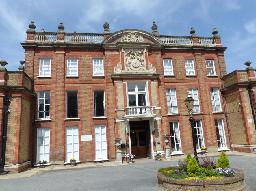
| 20/9/1870 | Eugénie is based in Camden Place, Chislehurst. Her husband, Napoleon III, would join her in 1871. They settled in a three-story house, rented for a reasonable price from a Mr. Strode, who had served as trustee for Napoleon's former mistress, Miss Howard. |
| 31/10/1870 | Eugénie arrives at Wilhemshöhe where Napoleon III is imprisoned. She had travelled incognito to Germany to visit him. At the same day Bazaine spoke with Napoleon III. [Bazaine, François Achille] |
| 3/11/1870 | Eugénie returns to Chislehurst. She had visited her husband Napoleon III at Wihelmshöhe. |
| 8/2/1871 | Napoleon III makes declaration at Wilhelmshöhe. For the first time since he was a prisoner of war, he made an official statement. He said the interim French government was illegal because it had not been elected by universal suffrage. In March, he reiterated that a government that had not secured a majority in a referendum had no legal authority in France. He indicated that he himself had secured a large majority of voters four times. |
| 1/3/1871 | The National Assembly declares Napoleon III deposed |
| 19/3/1871 | Napoleon III leaves Wilhelmshöhe as a free man. He had been released from German captivity and left for England. His wife Eugénie and his son were already there. |
| 21/3/1871 | Malmesbury visits the former Napoleon III at Chislehurst. Napoleon III had been freed from imprisonment in Germany two days before. [Malmesbury, James Howard Harris, 3rd Earl of] |
| 27/3/1871 | . In her diary she wrote: A little before three I went down to receive the Emperor Napoleon. I went to the door and embraced the Emperor comme de rigueur. It was a moving moment, when I thought of the last time he came here in '55, in perfect triumph, dearest Albert bringing him from Dover, the whole country mad to receive him, and now! He seemed much depressed and had tears in his eyes, but he controlled himself and said Il y a bien longtemps que je n'ai vu votre Majesté. He is grown very stout and grey ... but otherwise there was the same pleasing, gentle, and gracious manner. |
| 20/4/1872 | Victoria visits Napoleon III at Camden Place, Chislehurst |
| 12/5/1872 | Napoleon III takes sole responsibility for Sedan. In a letter he stated that he took full responsibility for the surrender at Sedan to the Germans on 1 September 1870. |
| 26/12/1872 | Sir Henry Thompson examines the bladder of Napoleon III. A laparoscopy reveals a stone the size of a date in his bladder. Napoleon agrees to surgery to break it up. |
| 3/1/1873 | First bladder stone operation on Napoleon III. He was anesthetized with chloroform, after which half of his bladder stone was pulverized. The operation was a success, and a second one was scheduled for January 6th. |
| 6/1/1873 | Napoleon III undergoes a second operation on his bladder. The doctors crushed another piece of his bladder stone. After this, one more operation was needed to completely remove the stone. Unfortunately, Napoleon's condition deteriorated rapidly after this, and he died. |
| 14/1/1873 | 17,000 people visit the deceased Napoleon III. He was laid out in the hall of his last house Camden Place in Chislehurst. Many of the visitors had come from France. |
| 15/1/1873 | Funeral of Napoleon III in Chislehurst. He was buried in the catholic chuch St. Mary's. The Prince Imperial and Prince Napoléon were present. His widow Eugénie stayed behind in their house in Camden Place. |
| 23/3/1881 | Eugénie leaves Camden Place in Chislehurst. It was where she had gone to live with Napoleon III after his deposition, and where she had had to cope with both his death and that of her only son. She had meanwhile purchased Farnborough Hill in Farnborough from the publisher Thomas Longman. Until 1888, she would return every year on January 9th and June 1st, the anniversaries of her husband's and son's deaths, for Mass. After their remains were transferred to Farnborough, she only returned to Chislehurs once more in 1890. |
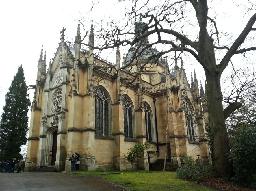
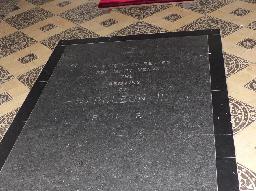
| 9/1/1888 | The remains of Napoleon III and the Prince Imperial are transferred to Farnborough. Former Empress Eugénie had built a new abbey in Farnborough between 1883 and 1888. Part of it was a chapel in which the emperor and his son were reburied. A few weeks later Queen Victoria visited the place. The Norbertines care for the imperial mausoleum until 1895. In that year the empress replaced them by the Benedictines. |
| 5/6/1888 | King Oscar II of Sweden visits the mausoleum of Napoleon III in Farnborough |