| 5/6/1810 | Shelley's novel "Zastrozzi" is published. Publishers were Messrs. Wilkie and Robinson. |
| 17/9/1810 | Shelley's "Original Poetry, by Victor and Cazire" is published.. Possible Cazire was an alias for Elizabeth Shelley or for Harriet Grove. The edition was withdrawn after it became known that some of the verses were written by M.G. Lewis. At that time about a 100 copies were already in circulation. |
| 0/12/1810 | Shelley's second novel "St. Irvyne, or the Rosicrucian" is published [Godwin, William] |
| 9/2/1811 | Advertisement for Shelley's "The Necessity of Atheism". It was published in the Oxford University and City Herald. The advertisement announced the publication of the pamphlet without offering it for sale. |
| 13/2/1811 | Shelley's pamphlet The Necessity of Atheism is distributed |
| 25/3/1811 | Percy Bysshe shelley is expelled from Oxford University. Shelley and his friend Thomas Jefferson Hogg refused to state that they were or weren't the authors of the pamphlet "The Necessity of Atheism", that they had written and distributed. It is unclear how much Hogg contributed to the pamphlet. |
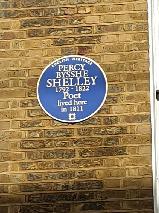
| 26/3/1811 | Shelley and Hogg leave Oxford. In the morning, by coach. After they arrived in London they took lodgings at 15 Poland Street. Shelley liked the name of the street because if reminded him of Thaddeus of Warsaw and of freedom. [Hogg, Thomas Jefferson] |
| 25/8/1811 | Percy Bysshe Shelley elopes with Harriet Westbrook [Westbrook, Harriet] |
| 28/8/1811 | Perct Bysshe Shelley marries Harriet Westbrook in Edinburgh. They had met in December 1810. Harriet was a pupil at the same boarding school as Shelley's sisters. Their romance was encouraged by Harriet's sister Eliza. On 25 August 1811 Shelley left for Edinburgh with sixteen-year old Harriet and they were married three days later. They had no permission from their fathers and their allowances were cut. [Westbrook, Harriet] |
| 0/10/1811 | Thomas Jefferson tries to seduce Harriet Shelley. Harriet had married Percy Bysshe Shelley in August. Hogg visited her in York at the time Shelley was in Sussex. Harriet rejected Hogg. [Hogg, Thomas Jefferson][Westbrook, Harriet] |
| 0/11/1811 | Percy Bysshe Shelley meets Robert Southey |
| 1/12/1811 | Shelley arrives at Greystoke, the home of the Duke of Norfolk. The Duke of Norfolk attempted a reconciliation between Shelley and his father Timothy. Shelley wrote an apology, but stated that he wouldn't hide his religious and political opinions. His father gave in and restored his allowance. |
| 3/1/1812 | Percy Bysshe Shelley starts his correspondence with William Godwin [Godwin, William] |
| 0/2/1812 | Percy Bysshe Shelley visits Ireland for the first time |
| 14/10/1812 | First meeting between Percy Bysshe Shelley and William Godwin [Godwin, William] |
| 11/11/1812 | Mary Godwin is in the same house as Shelley and Harriet. Shelley, his wife Harriet and Harriet's sister Eliza dined with the Godwins that night. But Mary was tired and she probably remained upstairs. [Shelley, Mary][Westbrook, Harriet] |
| 0/5/1813 | Shelley's "Queen Mab" is published. It contained nine canto's and seventeen notes. 250 copies were printed. 70 were bound and distributed by Shelley himself. The other copies were stored at William Clark's bookshop in London where they were rediscovered in 1821 and distributed. |
| 28/6/1813 | Percy Bysshe Shelley's daughter Eliza Ianthe is born |
| 22/3/1814 | Shelley marries Harriet Westbrook again. They had first married in Edinburgh and at the time Harriet was a minor and she hadn't received permission from her father. But their relations were already strained at the time. [Westbrook, Harriet] |
| 5/5/1814 | Percy Bysshe Shelley meets Mary Godwin. Shelley dined with William Godwin at Skinner Street. After this meeting Shelley and Mary soon started to spend days together. [Godwin, William][Shelley, Mary] |
| 18/6/1814 | Shelley arrives in London from Bracknell. Het had to negotiate a loan for William Godwin and visited Godwin frequently. [Godwin, William] |
| 26/6/1814 | Mary Godwin and Percy Bysshe Shelley declare each other their love. They did so at the tomb of Mary's mother Mary Wollstonecraft. When Mary's father William Godwin heard the news he strongly disagreed. [Shelley, Mary][Wollstonecraft, Mary] |
| 0/7/1814 | Shelley takes laudanum after Mary refuses to see him. Shelley had written to his wife Harriet that he loved Mary Godwin. Harriet came to London and visited Godwin. Under pressure Mary promised to meet Shelley no more. But Shelley turned hysteric and he appeared with guns, laudanum and suicide threats. They managed to calm him down, but soon afterwards he took a huge dose of laudanum. Godwin hurried to his lodgings where he found Shelley and a docter. Shelley survived, but his friend Thomas Peacock hardly recognized him when he saw him. [Shelley, Mary][Westbrook, Harriet] |
| 6/7/1814 | Shelley asks William Godwin for the hand of his daughter Mary. Shelley wanted to end his marriage to Harriet Westbrook and wanted to go abroad with Mary Godwin. William Godwin didn't approve at all. [Godwin, William][Shelley, Mary] |
| 28/7/1814 | Shelley and Mary Godwin leave London to elope to France. They secretly left London in the company of Claire Clairmont. They left for Dover, crossed the Channel in an open boat and travelled to Paris. [Clairmont, Claire][Shelley, Mary] |
| 13/9/1814 | Shelley and Mary Godwin return to London [Shelley, Mary] |
| 27/9/1814 | Shelley and Mary move to 5 Church Terrace, Pancras, London. Claire Clairmont went with them. [Clairmont, Claire][Shelley, Mary] |
| 23/10/1814 | Shelley hides for his creditors. Between 23 Oct and 9 Nov he and Mary lived apart. [Shelley, Mary] |
| 14/11/1814 | Shelley introduces Mary to his friend Hogg [Hogg, Thomas Jefferson][Shelley, Mary] |
| 30/11/1814 | Charles, the son of Shelley and Harriet Westbrook is born. At that time Shelley had left Harriet and had eloped with Mary Godwin. [Shelley, Mary][Westbrook, Harriet] |
| 0/1/1815 | Sir Bysshe Shelley dies. His son Timothy Shelley inherited the baronetcy and Percy Bysshe shelley was now the first heir. |
| 1/1/1815 | T.J. Hogg declares his love to Mary Godwin, encouraged by P.B. Shelley. Mary accepted his affection, but she didn't answer it physically since she was pregnant from Shelley. Shelley was a strong advocate of free love and it is possible that he had sexual relations with her stepsister Claire at the time. [Clairmont, Claire][Hogg, Thomas Jefferson][Shelley, Mary] |
| 10/1/1815 | Shelley and Mary move to 4 Hans Place, London. Claire Clairmont was once more in their company. [Clairmont, Claire][Shelley, Mary] |
| 2/3/1815 | Shelley and Mary move to Arabella Road, Pimlico, London. In their company were Claire Clairmont and Clara, Mary and Shelley's baby girl. [Clairmont, Claire][Shelley, Mary] |
| 6/3/1815 | Mary Godwin's stillborn daughter Clara dies [Shelley, Mary] |
| 13/5/1815 | Shelley signs an agreement with his father regarding his allowance. They agreed on a yearly amount of 1,000 pounds. |
| 24/1/1816 | William, the second child of Mary Godwin and Percy Bysshe Shelley, is born [Shelley, Mary] |
| 0/2/1816 | Percy Bysshe Shelley's "d'Alastor" is published |
| 23/3/1816 | William Godwin refuses to receive Percy Bysshe Shelley at Skinner Street [Godwin, William] |
| 2/5/1816 | Percy Bysshe Shelley, Mary Godwin and Claire Clairmont leave London for Geneva [Clairmont, Claire][Shelley, Mary] |
| 17/5/1816 | Percy Bysshe Shelley, Mary Godwin and Claire Clairmont arrive in Geneva. Soon Lord Byron and his physician John Polidori would arrive there as well. [Shelley, Mary] |
| 27/5/1816 | Possible first meeting of Byron and Shelley. It is not entirely certain that they never met before. Byron had just arrived in Switzerland in the company of John Polidori. [Byron, George Noel Gordon ] |
| 16/6/1816 | Percy Bysshe Shelley, Mary Godwin, Claire Clairmont, Lord Byron and John Polidori tell each other ghost stories. They told each other stories all night and decided that each of them would write a ghost story. Mary Shelley wrote "Frankenstein" and John Polidori wrote "The Vampyre". [Byron, George Noel Gordon ][Clairmont, Claire][Shelley, Mary] |
| 21/6/1816 | Percy Bysshe Shelley, Mary Godwin and Claire Clairmont go to Chamonix [Clairmont, Claire][Shelley, Mary] |
| 27/6/1816 | Byron plucks a sprig of Gibbon's acacia. This happened in Lausanne, where Edward Gibbon had completed his "Decline and Fall of the Roman Empire". He had gone there with Shelley and they entered the gardens of Gibbon's former summer residence. Gibbon had walked outside into the dark after completing his work and was relieved that his task was completed. At the same time he felt very lonely. By the time Byron and Shelley walked in the garden, the house was a ruin and Gibbon had been dead for over twenty years. [Byron, George Noel Gordon ] |
| 20/8/1816 | 'Monk' Lewis adds a codicil to his testament. He did this at the Villa Deodati, Byron's rented home at the Lake of Geneva. Byron, Shelley and Polidori acted as witnesses. In the codicil he obliged his heirs to live in Jamaica for three months of every year, to see if the slaves at his properties were treated well. He also prohibited slaves to be sold. He would die on 14 May 1818, shortly after such an inspection on Jamaica. [Byron, George Noel Gordon ] |
| 0/9/1816 | Mary Godwin, Percy Bysshe Shelley and Claire Clairmont arrive in Bath. After their return to England they travelled to Bath where they took lodgings at 5 Abbey Church Yard. In Bath Mary attended lectures by Dr Wilkinson at the Kingston Lecture Room and Wilkinson suggested that electricity might be used to bring inanimate matter to life. This was an inspiration to Mary's novel "Frankenstein". [Clairmont, Claire][Shelley, Mary] |
| 8/9/1816 | Percy Bysshe Shelley, Mary Godwin and Claire Clairmont return to England and arrive at Portsmouth [Shelley, Mary] |
| 27/12/1816 | Reconciliation between Percy Bysshe Shelley and William Godwin. Now that Shelley wanted to mary his daugter Mary Godwin restored their relations. [Godwin, William] |
| 30/12/1816 | Percy Bysshe Shelley marries Mary Godwin. At St. Mildred's Church, London. [Shelley, Mary] |
| 0/1/1817 | Shelley's "A proposal for putting reform to the vote throughout the kingdom" is published. The pamphlet appeared under the name 'The Hermit of Harlow'. |
| 8/1/1817 | The Westbrook family starts a legal procedure for the custody of Percy Bysshe Shelley's children. He had left his wife Harriet Westbrook and she had committed suicide. [Westbrook, Harriet] |
| 24/1/1817 | The trial for the custody of Percy Bysshe Shelley's children begins. It was presided by Lord Chancellor Eldon. |
| 27/2/1817 | Percy Shelley and Mary Shelley leave Bath. They stayed with Percy's friend Thomas Peacock and went to live in Marlow-on-Thames, Buckinghamshire. [Shelley, Mary] |
| 18/3/1817 | Percy Bysshe and Mary Shelley move to Albion House, Marlow [Shelley, Mary] |
| 27/3/1817 | Lord Chancellor Eldon denies Shelley the custody to his children. Eldon's former order of March 1817 concludes "His Lordship doth order that the Defendant Percy Bysshe Shelley and his Agents be restrained from taking possession of the persons of the Plaintiffs Eliza Ianthe Shelley and Charles bysshe Shelley the Infants or Intermeddling with the said Infants until the further order of this Court And it is ordered that it be referred to Mr. Alexander one of the Masters of this Court to enquire what will be a proper plan for the maintenance and education of the said Plaintiffs the Infants and..." |
| 14/5/1817 | Mary Shelley completes her novel "Frankenstein". She asked Percy Bysshe Shelley to write an introduction and he did so. [Shelley, Mary] |
| 7/11/1817 | Percy Bysshe Shelley witnesses an execution in Derby. The three workers Jeremiah Brandreth, William Turner, and Isaac Ludlum or Ludlam were found guilty of leading the Pentrich Rising. They were hanged and meant to be cut into pieces afterwards, but this was changed to beheading. Half an hour after they were hanged the executioner had a hard time beheading them. When the heads were finally shown to the public, it panicked and ran away. Shelley condemned the cruelty of the government in pamphlet. |
| 0/12/1817 | Percy Bysshe Shelley's "The Revolg of Islam" is published |
| 9/3/1818 | William and Clara Shelley and Allegra Byron baptised at St Giles-in-the-Fields in London. The baptism took place before Percy, Mary and Clare left for the continent for the second time. The current church is from 1810 and the font is probably the same as at the time of the baptism. [Clairmont, Claire][Shelley, Mary] |
| 11/3/1818 | Mary Shelley, Percy Bysshe Shelley and Claire Clairmont leave for Italy. They crossed the Channel on the 12th. [Clairmont, Claire][Shelley, Mary] |
| 11/6/1818 | The Shelleys and Claire Clairmont move to the Casa Bertini in Bagna di Lucca [Clairmont, Claire][Shelley, Mary] |
| 17/8/1818 | Shelley travels to Venice with Claire Clairmont. Claire wanted to visit her daughter Allegra who was with the father, Lord Byron. Mary Shelley stayed behind in Bagni di Lucca. [Byron, Allegra][Clairmont, Claire][Shelley, Mary] |
| 31/8/1818 | Mary Shelley leaves Bagna di Lucca for Venice. Her husband had asked her in a letter to join him and Claire Clairmont there. [Shelley, Mary] |
| 24/9/1818 | Clara Shelley dies of dysentery. She was the third child of Mary and Percy Bysshe Shelley and she had contracted the illness during a hurried journey to Este. [Shelley, Mary] |
| 5/11/1818 | The Shelleys travel to Rome. They would stay there until the end of November and then they moved on to Naples. [Shelley, Mary] |
| 27/2/1819 | Shelley registers a daughter, Elena, in Naples. The child was named Elena Adelaide. Shelley gave 27 Dec 1818 as her birthdate and himself and his wife Mary as her parents. It seems impossible that the child was Mary's. According to Mary's diary Claire Claimont was 'unwell' on 27 Dec. But there is no further evidence that Claire had been pregnant, so it's unlikely as well that Claire was the mother. The child was probably adopted by another family. Only in 1936 the existence of Elena was discovered by Newman Ivy White. [Clairmont, Claire][Shelley, Mary] |
| 0/3/1819 | The Shelleys return to Rome [Shelley, Mary] |
| 9/3/1819 | Percy Bysshe and Mary Shelley visit the Pantheon in Rome. They went there again by moonlight. [Shelley, Mary] |
| 0/5/1819 | Shelley starts writing "The Cenci" |
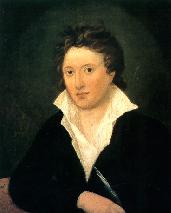
| 8/5/1819 | Percy Bysshe Shelley sits for a portrait by Amelia Curran. He posed on May 8th and 9th in Rome. The portrait was never finished. After Shelley's death Mary asked if she could have it. Amelia Curran answered from Paris that she had wanted to burn it because it was bad but that she hadn't done so. In May 1825 she sent the portrait to Mary from Rome. [Curran, Amelia][Shelley, Mary] |
| 7/6/1819 | William Shelley dies from malaria. He was the second child of Percy Bysshe and Mary Shelley. He was buried in the Protestant Cemetery in Rome. On 10 Jun the Shelleys left Rome. [Shelley, Mary] |
| 10/6/1819 | The Shelleys and Claire Clairmont leave Rome for Livorno. In Leghorn they wanted to visit the Gisbornes, who lived there. [Clairmont, Claire][Shelley, Mary] |
| 30/9/1819 | Mary Shelley meets Lady Mount Cashell. She visited her in Pisa together with Percy Bysshe Shelley and Claire Clairmont. [Clairmont, Claire][King, Margaret, Lady Mount Cashell][Shelley, Mary] |
| 2/10/1819 | The Shelleys and Claire Clairmont move to Florence, 4395 via Valfonda. Claire left for Vienna on 10 Nov. [Shelley, Mary] |
| 5/11/1819 | Shelley and Mary travel to Rome. They would stay there until the end of November and then depart for Naples. [Shelley, Mary] |
| 12/11/1819 | Percy Bysshe and Mary Shelley's son Percy Florence is born. He was born in Florence. [Shelley, Mary][Shelley, Percy Florence, 3rd Baronet] |
| 0/1/1820 | Shelley and Mary move to Casa Frasi, Pisa [Shelley, Mary] |
| 0/3/1820 | Shelley's lyrical drama "Cenci" is published and Mary Shelley starts "Catruccio, Prince de Lucca". William Godwin later changed the name of his daughter's novel in "Valperga". [Godwin, William][Shelley, Mary] |
| 15/6/1820 | The Shelleys return to Bagna di Lucca [Shelley, Mary] |
| 5/8/1820 | The Shelleys move to Casa Prinni, Bagni San Giuliano [Shelley, Mary] |
| 25/8/1820 | William Godwin receives the last letter Percy Bysshe Shelley wrote to him. Shortly informed Godwin that he would not send him anymore money after he had given him a considerable fortune during the last few years. He also hinted that Godwin had been accused of selling his daughter Mary to Shelley and sending more money would probably further damage his and her reputation. This last letter was probably written on 7 August. Godwin noted the receival of the letter with anger in his diary. [Godwin, William][Shelley, Mary] |
| 2/10/1820 | Shelley meets Mavrocordato for the first time [Mavrocordato, Alexander] |
| 0/11/1820 | The Shelleys meet Emilia Viviani in Florence. She was the daughter of the governor of Pisa and she was locked up in a convent until her marriage. She was the inspiration for Shelley's "Epipsychidion". [Shelley, Mary] |
| 16/1/1821 | Jane and Edward Williams arrive in Pisa. They met the Shelleys on January 19th and the couples soon became friends. [Shelley, Mary][Williams, Edward Ellerker][Williams, Jane] |
| 0/2/1821 | Percy Bysshe Shelley writes "Epipsychidion" for Emilia Viviani. Different sources state that he wrote in January/February or in March respectively. Emilia was the daughter of the governor of Pisa, who had placed her in a convent. Shelley had visited her several times and they had a brief correspondence. The poem was written in January and Febraury in 1821 and published anonymously later that year by Charles and James Ollier in London. After publication Shelley asked them to withdraw it, probably because of its autobiographical elements. |
| 5/3/1821 | The Shelleys move to Casa Aulla, Pisa [Shelley, Mary] |
| 8/5/1821 | The Shelleys move to Bagni di San Giuliano [Shelley, Mary] |
| 25/10/1821 | The Shelleys move to Tre Palazzi di Chiesa, Pisa [Shelley, Mary] |
| 5/11/1821 | First meeting between Lord Byron and Edward Williams. Percy Byshhe Shelley took Williams to see Byron and introduced them to each other. Williams was favourably impressed by Byron's good mood and by his wit. [Byron, George Noel Gordon ][Williams, Edward Ellerker] |
| 20/11/1821 | Shelley introduces Thomas Medwin to Lord Byron. Medwin had arrived in Pisa in November 1821. They got along well and he often dined with Byron and his circle. They also went pistol shooting. When Medwin left Pisa in April 1822, Byron organised a party for him. [Byron, George Noel Gordon ][Medwin, Thomas] |
| 14/1/1822 | Edward John Trelawny arrives in Pisa. He was a friend of the Williams family and he admired Lord Byron. He soon met the Shelleys. [Shelley, Mary][Trelawny, Edward John][Williams, Edward Ellerker][Williams, Jane] |
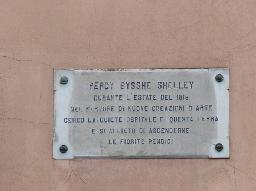
| 30/4/1822 | The Shelleys and Claire Clairmont move to Casa Magni, San Terenzo. The Williams family joined them one day later. [Clairmont, Claire][Shelley, Mary][Williams, Edward Ellerker][Williams, Jane] |
| 16/6/1822 | Mary Shelley miscarries and almost dies herself. She thought she was dying from the hemorrhaging. Her own mother Mary Wollstonecraft had died after Mary's birth. Shelley saved her by putting her into a bucket of ice. When the doctor arrived the critical stage had already passed. Years later Mary wrote that she felt a passive kind of satisfaction at the time she thought she was dying and that the experience had removed her fear of death. [Shelley, Mary] |
| 22/6/1822 | Shelley is dreaming that he strangles his wife Mary. First he dreamed that Edgar and Jane Williams walked naked and rted with blood into his room and told him that the see was destroying their house. When he looked outside in his dream he saw himself strangling Mary. When he woke up he screamed and ran into Mary's room to see if she was still alive. She had almost died of a miscarriage a few days before and she was still weak. [Shelley, Mary] |
| 8/7/1822 | Percy Bysshe Shelley drowns in the Gulf of Spezia. He and Edward Williams were sailing back home to Mary Shelley and Jane Williams from Leghorn, where they had met Leigh Hunt and his family. Allthough a storm was rising they left in Shelley's small boat the Don Juan. Only ten days later their bodies were found on the beach. [Shelley, Mary][Williams, Edward Ellerker][Williams, Jane] |
| 18/7/1822 | Shelley's dead body is found near Viareggio |
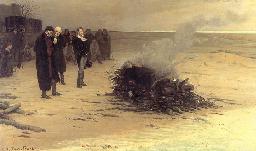
| 18/8/1822 | Trelawny burns Shelley's body on the beach. Shelley's body was found on the beach and buried there. It was not allowed to move it because of the risk of diseases. A huge metal furnace was brought to the beach and his remains were cremated. The ashes were taken to the Protestant Cemetery in Rome. Trelawny snatched Shelley's heart from the flames. Leigh Hunt wanted to keep it, but after some pression he gave it to Mary Shelley. Lord Byron couldn't stand it and swam back to his nearby ship before the burning of the corpse started. [Byron, George Noel Gordon ][Hunt, Leigh][Shelley, Mary][Trelawny, Edward John] |
| 1/1/1823 | The second issue of The Liberal is published. This issue contained "Song, Written for an Indian Air" by P.B. Shelley and "A Tale of the Passions, or, the Death of Despina" by Mary Shelley. [Shelley, Mary] |
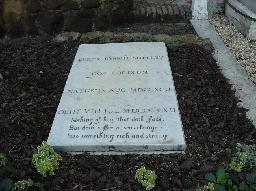
| 21/1/1823 | Shelley's ashes are transferred to the Protestant Cemetery in Rome |
| 0/4/1823 | The third issue of The Liberal is published. It appeared around 23 Apr 1823 and it contained "Lines to a Critic" by P.B. Shelley and "Madame D'Houtetot" by Mary Shelley. [Shelley, Mary] |
| 30/7/1823 | The fourth issue of The Liberal is published. It contained an essay about Giovanni Villani written by Mary Shelley. It is possible that she had already written it in 1821. [Shelley, Mary] |
| 0/6/1824 | Shelley's Posthumous Poems published by Mary Shelley. Sir Timothy Shelley stopped circulation by threatening to withdraw the allowance for her son Percy Florence. [Shelley, Mary] |
| 13/7/1827 | Mary Shelley finds out that her friend Jane Williams has betrayed her. Jane was Mary's best friend, but Jane had spread malicious rumours about Mary behind her back. One of the things Jane said was that she had treated Shelley badly during his last year. Jane told this to Leigh Hunt and T.J. Hogg. [Hogg, Thomas Jefferson][Hunt, Leigh][Shelley, Mary][Williams, Jane] |
| 0/0/1839 | Mary Shelley publishes an annotated version of the works of Percy Bysshe Shelley [Shelley, Mary] |
| 0/3/1843 | Mary Shelley arrives in Rome. She had been touring the continent with her son Percy Florence since June 1842 and it was her first visit to the city since the 1820s. They visited Shelley's grave but she couldn't find the grave of her son William who had died in Rome in 1819 and was buried at the same cemetery. Percy Florence was unimpressed with the art in Rome and to her disappointment he refused to visit the museums. Mary toured them with the art critic Alexis-Francóis Rio. [Shelley, Mary][Shelley, Percy Florence, 3rd Baronet] |
| 29/7/1848 | Mary Shelley joins her son Percy Florence and his wife Jane at Field Place. Jane St. John had married her son Percy Florence and they had returned from their honeymoon in the Lake District. Field Place was the birthplace of Percy Florence's father Percy Bysshe Shelley. [Shelley, Mary][Shelley, Percy Florence, 3rd Baronet][St. John, Jane] |
| 7/5/1886 | Trial performance van Shelley's "The Cenci". It was held at the Grand Theatre, Islington, London in front of 3,000 people. The main performers were Hermann Vezin and Alma Murray. |
| 6/12/1889 | Sir Percy Florence Shelley dies. He was the only surviving child of Percy Bysshe shelley and Mary Shelley. [Shelley, Mary][Shelley, Percy Florence, 3rd Baronet] |