| 6/4/1788 | William Godwin starts his journal. He continued it until the end of his life. |
| 13/4/1791 | First meeting between Mary Wollstonecraft and William Godwin. They met at the house of Joseph Johnson, Mary's publisher, who was hosting a dinner for Thomas Paine. They did not like each other on this occasion and did not see each other for several years afterwards. [Johnson, Joseph][Wollstonecraft, Mary] |
| 14/2/1793 | William Godwin's "Political Justice" is published |
| 30/4/1794 | William Godwin completes his novel "Caleb Williams". He finished the novel on this date. He wrote a foreword on 12 May 1794 and on 26 May 1794 it was in the shops. |
| 26/5/1794 | William Godwin's novel "Caleb Williams" is published |
| 22/12/1794 | First meeting between William Godwin and Samuel Coleridge. They became close friends. |
| 27/2/1795 | First meeting between William Godwin and William Wordsworth. It was at the house of William Frend. George Dyer, Thomas Holcroft, James Losh and and John Tweddell were present as well. [Wollstonecraft, Mary] |
| 26/11/1795 | The Second Edition of William Godwin's "Political Justice" is published |
| 8/1/1796 | Mary Wollstonecraft and William Godwin meet at the house of Mary Hays [Hays, Mary][Wollstonecraft, Mary] |
| 14/4/1796 | Mary Wollstonecraft visits William Godwin alone. At the time it was unusual that an unmarried woman visited an unmarried man alone. [Wollstonecraft, Mary] |
| 0/8/1796 | William Godwin asks Amelia Alderson to marry him. She declined and she married John Opie. |
| 21/8/1796 | Mary Wollstonecraft and William Godwin become lovers. This becomes clear from a secret diary that was kept by Godwin. [Wollstonecraft, Mary] |
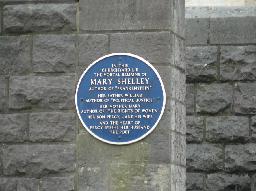
| 29/3/1797 | William Godwin marries Mary Wollstonecraft. At St. Pancras Church in London. [Wollstonecraft, Mary] |
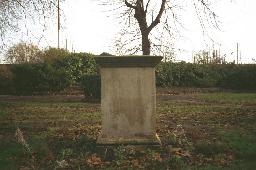
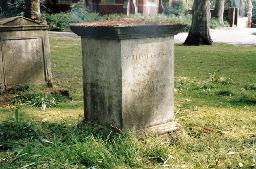
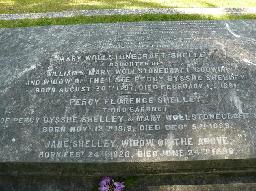
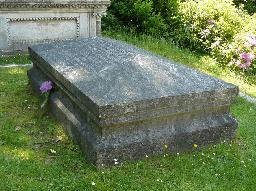
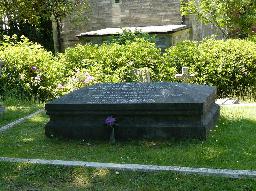
| 15/9/1797 | Mary Wollstonecraft is buried at St. Pancras' Churchyard. Her widower William Godwin was too upset to attend the funeral. [Wollstonecraft, Mary] |
| 0/12/1797 | The tgird edition of William Godwin's "Political Justice" is published |
| 31/12/1797 | William Godwin starts his novel "St Leon". In this novel he relates experiences from his marriage to Mary Wollstonecraft. |
| 2/12/1799 | Publication of William Godwin's "St Leon" |
| 4/12/1799 | Humphry Davy first meets William Godwin in London [Davy, Humphry ] |
| 0/0/1800 | William Godwin asks Maria Gisborne to marry him. Maria, who had recently been widowed, refused. [Gisborne, Maria] |
| 5/5/1801 | First meeting between William Godwin and Mary Jane Clairmont |
| 21/12/1801 | William Godwin marries Mrs Mary Jane Clairmont. Mrs Clairmont brought a son of seven year old, Charles, and a daughter of four years old, Jane, into the Marriage. Godwin's daughter Mary was four years old as well. |
| 8/2/1806 | William Godwin discloses to Fanny Imlay that he is not her father. This 'explanation with Fanny' made her clear that she lived with none of her natural parents. This knowledge haunted her afterwards and may have been a reason for her suicide in 1806. [Imlay, Fanny] |
| 24/8/1806 | Coleridge recites "The Ancient Mariner" to William Godwin and his daughter Mary. Coleridge frequently visited Godwin and this Sunday he recited his own poem "The Ancient Mariner". It was an experience that the nine year old Mary Godwin would never forget. [Shelley, Mary] |
| 18/5/1807 | william Godwin opens his library at 41 Skinner Street, London |
| 13/11/1807 | The Godwin family moves to 41 Skinner Street, London |
| 0/12/1810 | Shelley's second novel "St. Irvyne, or the Rosicrucian" is published [Shelley, Percy Bysshe] |
| 3/1/1812 | Percy Bysshe Shelley starts his correspondence with William Godwin [Shelley, Percy Bysshe] |
| 20/1/1812 | Claire Clairmont sees Lord Byron attending a public reading. Her stepfather William Godwin had taken her to a lecture on Shakespeare by Coleridge. Byron was also attending the lecture. [Byron, George Noel Gordon ][Clairmont, Claire] |
| 7/6/1812 | Mary Godwin leaves for Scotland to have a holiday. There was tension between her and her stepmother Mary Jane and Godwin arranged a long stay for her with an acquaintance in Dundee, the radical Dissenter Mr. William Baxter. [Shelley, Mary] |
| 14/10/1812 | First meeting between Percy Bysshe Shelley and William Godwin [Shelley, Percy Bysshe] |
| 2/10/1813 | First meeting between Lord Byron and William Godwin [Byron, George Noel Gordon ] |
| 5/5/1814 | Percy Bysshe Shelley meets Mary Godwin. Shelley dined with William Godwin at Skinner Street. After this meeting Shelley and Mary soon started to spend days together. [Shelley, Mary][Shelley, Percy Bysshe] |
| 18/6/1814 | Shelley arrives in London from Bracknell. Het had to negotiate a loan for William Godwin and visited Godwin frequently. [Shelley, Percy Bysshe] |
| 6/7/1814 | Shelley asks William Godwin for the hand of his daughter Mary. Shelley wanted to end his marriage to Harriet Westbrook and wanted to go abroad with Mary Godwin. William Godwin didn't approve at all. [Shelley, Mary][Shelley, Percy Bysshe] |
| 23/3/1816 | William Godwin refuses to receive Percy Bysshe Shelley at Skinner Street [Shelley, Percy Bysshe] |
| 27/12/1816 | Reconciliation between Percy Bysshe Shelley and William Godwin. Now that Shelley wanted to mary his daugter Mary Godwin restored their relations. [Shelley, Percy Bysshe] |
| 29/12/1816 | Reconciliation between William Godwin and Mary Godwin. It was now clear that Percy Bysshe Shelley would marry Mary Godwin and Godwin no longer objected to their relationship. [Shelley, Mary] |
| 24/11/1817 | William Godwin finishes reading "Frankenstein". The book was written by his daughter Mary and he was, against his habit, enthousiastic. One day later he wrote an introduction for his own book "Mandeville". [Shelley, Mary] |
| 0/8/1819 | Mary Shelley starts writing "Mathilda". She finished in in February, 1820 and sent the story to her father William Godwin in 1821. Godwin made no attempts to publish it amd it finally appeared in print in 1959. [Shelley, Mary] |
| 0/3/1820 | Shelley's lyrical drama "Cenci" is published and Mary Shelley starts "Catruccio, Prince de Lucca". William Godwin later changed the name of his daughter's novel in "Valperga". [Shelley, Mary][Shelley, Percy Bysshe] |
| 27/4/1820 | William Godwin sees Edmund Kean in "King Lear". For Godwin the play corresponded with the thoughts and fears that he had used in his own book "Mandeville". |
| 25/8/1820 | William Godwin receives the last letter Percy Bysshe Shelley wrote to him. Shortly informed Godwin that he would not send him anymore money after he had given him a considerable fortune during the last few years. He also hinted that Godwin had been accused of selling his daughter Mary to Shelley and sending more money would probably further damage his and her reputation. This last letter was probably written on 7 August. Godwin noted the receival of the letter with anger in his diary. [Shelley, Mary][Shelley, Percy Bysshe] |
| 28/7/1823 | William Godwin attends the theatre premiere of "Frankenstein" at the English Opera House. The book "Frankenstein, or The Modern Prometheus" was written by his daughter Mary Shelley. It was adapted for the stage by Richard Brinsley Peake as " Presumption; or, the Fate of Frankenstein". James William Wallack was Victor Frankenstein and Thomas Potter Cooke played the monster. Further actorss were Robert Keeley and Mary Ann Povey. The play originally ran for 37 performances and it was revived several times at the English Opera House. [Cooke, Thomas Potter][Shelley, Mary] |
| 29/8/1823 | Mary Shelley attends a theatre performance of "Frankenstein". Her father William Godwin was there as well. He had already attended the premiere on 27 Jul 1823. Jane Williams and William Godwin jr. were also there. The venue was the English Opera House Royal and the adaption was by Richard Brinsley Peake. [Shelley, Mary][Williams, Jane] |
| 26/1/1824 | Mary Shelley and William Godwin see Edmund Kean in Richard III. Mary was impressed by Kean's part and planned to write a tragedy herself. The venue was the New Theatre Royal, Drury Lane, London. [Shelley, Mary] |
| 31/1/1824 | Mary Shelley and William Godwin see Edmund Kean as Shylock [Shelley, Mary] |
| 26/2/1825 | Mary Shelley, Willam Godwin and Pietro Gamba see Edmund Kean as Othello. Jane Williams was there as well. Gamba was in England to discuss the publication of his book "A Narrative of Lord Byron's Last Journey to Greece" with publisher Murray. [Shelley, Mary][Williams, Jane] |
| 17/3/1825 | William Godwin's publishing company goes bankrupt |
| 25/3/1830 | William Godwin and Edward Bulwer-Lytton visit Mary Shelley. Washington Irving and Thomas Moore were there as well. On 7 June 1830 Godwin and Bulwer-Lytton visited Mary again. [Irving, Washington][Shelley, Mary] |
| 14/4/1836 | William Godwin is buried at St. Pancras' Churchyard. He was buried next to Mary Wollstonecraft, who had died in 1797. The ceremony was attended by Percy Florence Shelley (chief mourner), E.J. Trelawny, James Kenney, Thomas Campbell, Dr. Uwins and Mr. Caunter. The Times reported on the funeral on 16 Apr 1836. [Trelawny, Edward John][Wollstonecraft, Mary] |