| 13/1/1835 | Wilkie Collins enters Maida Hill Academy |
| 0/8/1843 | "The Last Stage Coachman" by Wilkie Collins is published in "The Illuminated Magazine" |
| 8/3/1845 | Wilkie Collins' first novel is refused by Chapman & Hall. The story was set in Tahiti. He had sent it to Chapman & Hall in January. |
| 17/5/1846 | Wilkie Collins is admitted as a student to Lincoln's Inn |
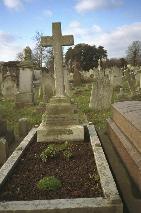
| 23/2/1847 | Burial of William Collins at Paddington Green Churchyard. At the Saint Mary on Paddington Green Churchyard in London. He was buried in the grave where his mother Margaret and his brother Frank were buried before. Among those present were his wife Harriet, his sons Wilkie and Charles, the painters Thomas Uwins and Charles Leslie and his friend Joseph Bullar as well as his brother John Bullar. [Collins, Charles Allston][Collins, William][Leslie, Charles] |
| 0/0/1849 | Wilkie Collins exhibits his painting "Smuggler's Retrea" at the summer exhibition of the Royal Academy |
| 27/2/1850 | Wilkie Collins' first novel "Antonina" is published |
| 0/1/1851 | "Rables beyond Railways" by Wilkie Collins is published. It was an account of his travels in Cornwall. |
| 12/3/1851 | First meeting between Charles Dickens and Wilkie Collins. The meeting took place at the house of John Forster after Augustus Egg had had recruited Collins for Dickens' amateur theatrical company. [Dickens, Charles][Egg, Augustus Leopold] |
| 0/1/1852 | Wilkie Collin's "Mr. Wray's Cash Box" is published. It had a cover illustration by John Millais. [Millais, John] |
| 24/1/1852 | For the first time a story of Wilkie Collins appears in Household Words. It was the story "A Terribly Strange Bed". |
| 16/11/1852 | Wilkie Collins' novel "Basil" is publised |
| 5/6/1854 | Wilkie Collins' novel "Hide and Seek" is published |
| 16/1/1855 | Wilkie Collins' play "The Lighthouse" is first performed. It was performed at Travistock House by the theatre group that was led by Charles Dickens |
| 0/2/1856 | "After Dark" by Wilkie Collins is published. It was a volume of short stories. |
| 6/1/1857 | "The Frozen Deep" by Wilkie Collins is performed by Charles Dickens' theatre group. It was the first of four semi-public performances at Tavistock House, Dickens' home in London. About ninety people were present. [Dickens, Charles] |
| 1/6/1857 | "The Dead Secret" by Wilkie Collins is published in book form. It had been published serially in "Household Words" from 3 Jan to 13 Jun 1857. |
| 0/8/1857 | Wilkie Collins' play "The Lighthouse" is performed at the Olympia Theatre |
| 21/8/1857 | Wilkie Collins' play "The Frozen Deep" is performed three times in Manchester at the Free Trade Hall. Dickens played the main part in the play that was written by his friend and the public was completely under his spell. The second night was attended by 3,000 people. He had hired the actress Frances Ternan together with her daughters Maria and Ellen. Ellen was so impressed by the scene in which Dickens died that her tears fell on his beard and his clothes. The performances were given August 21, 22 and 24. [Dickens, Charles][Ternan, Ellen][Ternan, Maria Susanna] |
| 11/10/1858 | "The Red Vial" by Wilkie Collins is produced at the Olympic Theatre. Frederick Robson was Hans Grimm and Fanny Stirling was Madame Bergman. Collins later used the plot for his novel "Jezebel's Daughter" (1880). It ran for four weeks. As far as known it wasn't performed again until Caroline Radcliffe staged it in 2011 with the Department of Drama and Theatre Arts of Birmingham University. [Stirling, Fanny] |
| 16/5/1859 | Charles Dickens and Wilkie Collins dine at Vereys in Regent Street, London [Dickens, Charles] |
| 26/11/1859 | Start of the serial publication of "The Woman in White" by Wilkie Collins in "All The Year Round" |
| 14/8/1860 | "The Woman in White" by Wilkie Collins is published |
| 4/9/1860 | Wilkie Collins leaves London to stay in Gloucester for a week |
| 15/3/1862 | Start of serial publication of "No Name" by Wilkie Collins in "All The Year Round. The last part appeared on 17 Jan 1863. |
| 31/12/1863 | "No Name" by Wilkie Collins is published in book form |
| 15/5/1866 | "Armadale" by Wilkie Collins is published in two volumes |
| 4/1/1868 | Start of the serial publication of "The Moonstone" by Wilkie Collins in "All the Year Round". The last part was published on 8 Aug 1868. |
| 1/7/1868 | "The Moonstone" by Wilkie Collins is published in book form in three volumes |
| 29/3/1869 | Premiere of Wilkie Collins' play "Black and White" at the Adelphi Theatre in London. The outline of the play was suggested by Charles Fechter. Fechter played Maurice de Layrac and Carlotte Leclerq played Miss Milburn. It ran for sixty nights. After that an unsuccesful provincial tour followed. [Leclercq, Carlotta] |
| 9/10/1871 | Wilkie Collins' play "The Woman in White" is performed at the Olympia Theatre. In 1860 a pirated verison had been performed, but in 1871 Collins' own version was produced. It ran from 9 October 1871 to 24 February 1872. Actors in the original cast included John Billington, Wybert Reeve, George Vining, Maria Daly and Ada Dyas. |
| 22/2/1873 | Premiere of "Man and Wife" by Wilkie Collins at the Prince of Wales Theatre in London. Squire Bancroft had staged the play and played Speedwell and Lydia Foote was Anne. The play ran for 136 performances until August 1873. After that a provincial tour followed. [Bancroft, Squire ][Foote, Lydia] |
| 10/6/1873 | First meeting between Wilkie Collins and Kate Field. She was in England since May and they met at a dinner hosted by Anthony Trollope. [Trollope, Anthony] |
| 13/9/1873 | Wilkie Collins leaves for the USA. Before he left he drew up a will in which he provided for Martha Rudd as well as for Caroline Graves. |
| 25/9/1873 | Wilkie Collins arrives in New York for a reading tour |
| 27/9/1873 | Wilkie Collins is guest of honour at the Lotos Club in New York City |
| 2/10/1873 | Wilkie Collins visits Charles Fechter in Quakertown, Pennsylvania. Fechter had bought a ranch there and Collins stayed there for two or three days. |
| 10/11/1873 | First American performance of Wilkie Collins' "The New Magdalen" at the Broadway Theatre in New York. It was produced by August Daly and Wilkie Collins attented the performance. |
| 18/3/1874 | Wilkie Collins lands in Liverpool, returning from the USA |
| 9/12/1875 | First performance of Wilkie Collins' play "Lydia Gwilt" at the Alexandra Theatre in Liverpool. It was a stage adaption of the novel "Armadale". Lydia Gwilt was more sympathetic than in the novel and now Dr Downward was the main villain. |
| 15/4/1876 | First performance in London of Wilkie Collins' play "Miss Gwilt" at the Globe Theatre. Ada Cavendish played the title part and Mr Darch was played by A.W. Pinero. [Cavendish, Ada] |
| 12/3/1877 | Kate Field's "Extremes Meet" opens at the St James's Theatre in London. The leading role was played by herself.It was a play comedy in one-act and billed as a comedietta. Her friend Wilkie Collins was invited but he was ill with gout. |
| 29/8/1877 | Premiere of Wilkie Collins' play "The Dead Secret" at the Royal Lyceum Theatre in London. E.J. Bramwell had adapted Collin's novel for the stage with permission by the author. The actors included Miss Bateman and Arthur Wing Pinero. |
| 17/9/1877 | PRemiere of Wilkie Collin's play "The Moonstone" at the Royal Olympic Theatre in London. It was not a great succes and Henry Neville and Laura Seymour left the cast before the end of the run. [Seymour, Laura] |
| 5/6/1879 | Ada Cavendish plays Miss Gwilt in New York at Wallack's Theatre. "Miss Gwilt" was the stage adaption of Wilkie Collins' novel "Armadale". The play was produced for three weeks and didn't return after that. In London it had been staged for twelve weeks. [Cavendish, Ada] |
| 16/5/1883 | "Heart and Science" by Wilkie Collins is published in book form. It had been serially published in Belgravia Magazine from Aug 1882 until June 1883. |
| 15/7/1889 | Queen Victoria inquires about the health of Wilkie Collins. "The Times" of 15 Jul 1889 stated that 'The Queen has made special inquiries as to his health'. |
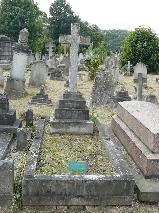
| 27/9/1889 | Wilkie Collins is buried at Kensal Green Cemetery. According to his wishes he was buried in a simple grave. Among those present were his niece Jane Ward, Holman-Hunt, Pigott, George Redford, Edmund Yates, Charles Dickens the Younger, Frank Beard, Caroline Graves, Ada Cavendish, Arthur Pinero, Squire Bancroft, Sebastian Schlesinger, Andrew Chatto, A.P. Watt, Hall Caine and Edmund Gosse. In 1895 Caroline Graves was buried in the same grave. [Bancroft, Squire ][Cavendish, Ada][Dickens, Charles Culliford Boz][Graves, Caroline Elizabeth][Hunt, William Holman][Schlesinger, Sebastian] |
| 0/0/1890 | "Blind Love" by Wilkie Collins is published. Collins had died before it was finished and Walter Besant had completed the story. [Besant, Walter ] |