Smith, Henry John Stephen |
| MATHEMATICIAN, ASTRONOMER (IRELAND) |
|
BORN 2 Nov 1826, Dublin - DIED 9 Feb 1883, Oxford, Oxfordshire: Keeper's House at the University Museum GRAVE LOCATION Oxford, Oxfordshire: St. Sepulchre’s Cemetery, Walton Street (St Paul section, Row 11, Grave A9 [St Paul ref G7]) |
|
Henry John Stephen Smith was born in Dublin as the son of the barrister John Smith (1792-1828), who died when he was two years old. He moved several times with his mother and his siblings. In 1831 they lived at Ryde on the Isle of Wight for a while. In 1841 he was admitted to Rugby School in Warwickshire and in 1844 he entered Baillol College at Oxford University. During a holiday in France he contracted malaria. He was not able to return to England immediately, but in France he attended lectures by François Arago and others. After his health improved, he returned to Oxford. In 1849 he obtained his BA and he stayed at the Baillol College as a fellow and as a mathematics teacher. He did not marry and after his mother died his sister moved in with him to keep house. In 1860 he became Savillian Professor of Geometry and he held this position until his death. He was elected a fellow of the Royal Society in 1861. Because he needed the income, he continued to teach at Baillol College until he received a fellowship at Corpus Christi College in 1873. In 1874 he became the Keeper of the University Museum and he moved to the Keeper's House with his sister. Smith knew French, Italian and German and he read widely. He was influenced by Carl Friedrich Gauss and contributed to number theory. Between 1859 and 1865 he wrote an extensive report on this subject. For his paper "Certain cubic and biquadratic problems" (1868) he received the Steiner Prize of the Royal Academy of Berlin. He was also a Mathematical Examiner for the University of London and from 1874 to 1896 he was president of the London Mathematical Society. The question for the 1882 Grand Prix in Mathematics by the Academy of Sciences, was a problem that Smith had already solved in 1867. Smith informed Charles Hermite (1822-1901) of this. Hermite realised the error and asked Smith to submit his solution to save the Academy from looking foolish. Smith did so, but he died in Oxford in 1883 before the prize was awarded. The Academy decided to award the prize to both Smith and the young Hermann Minkovski (1864-1909). Related persons • was pupil of Arago, François • was influenced by Gauss, Carl Friedrich |
| Images | |
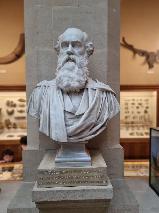 Bust of Henry John Stephen Smith at the Museum of Natural History in Oxford, Oxfordshire. Picture by Androom (09 Nov 2025) |
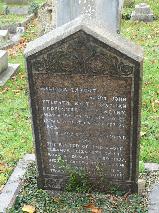 The grave of Henry John Stephen Smith at St Sepulchre's Cemetery in Oxford, Oxfordshire. Picture by Androom (09 Nov 2025) |
Sources • Henry John Stephen Smith - Wikipedia (EN) • Henry Smith (1826 - 1883) - Biography - MacTutor History of Mathematics • Henry & Eleanor Smith: St Sepulchre’s Cemetery, Oxford |


